OU Installs Oklahoma's Highest-Resolution Electron Microscope
OU's $2.5 million NSF MRI grant bought the NEOARM, a TEM with 40-picometer 4D-STEM resolution now serving researchers across Oklahoma from Lin Hall in Norman.
Key takeaways
- NSF Major Research Instrumentation Program awarded OU $2.5 million in 2023, award no. 2320468, running September 2023 to August 2026.
- The NEOARM reaches 70-picometer conventional resolution and at least 40 picometers with 4D-STEM, versus OU's prior 200 picometers.
- The instrument sits in a dedicated foam-lined room in OU's Lin Hall in Norman.
- The lab plans a second NSF MRI application for a focused ion beam scanning electron microscope.
- Oklahoma State University contributed a co-principal investigator to the grant.
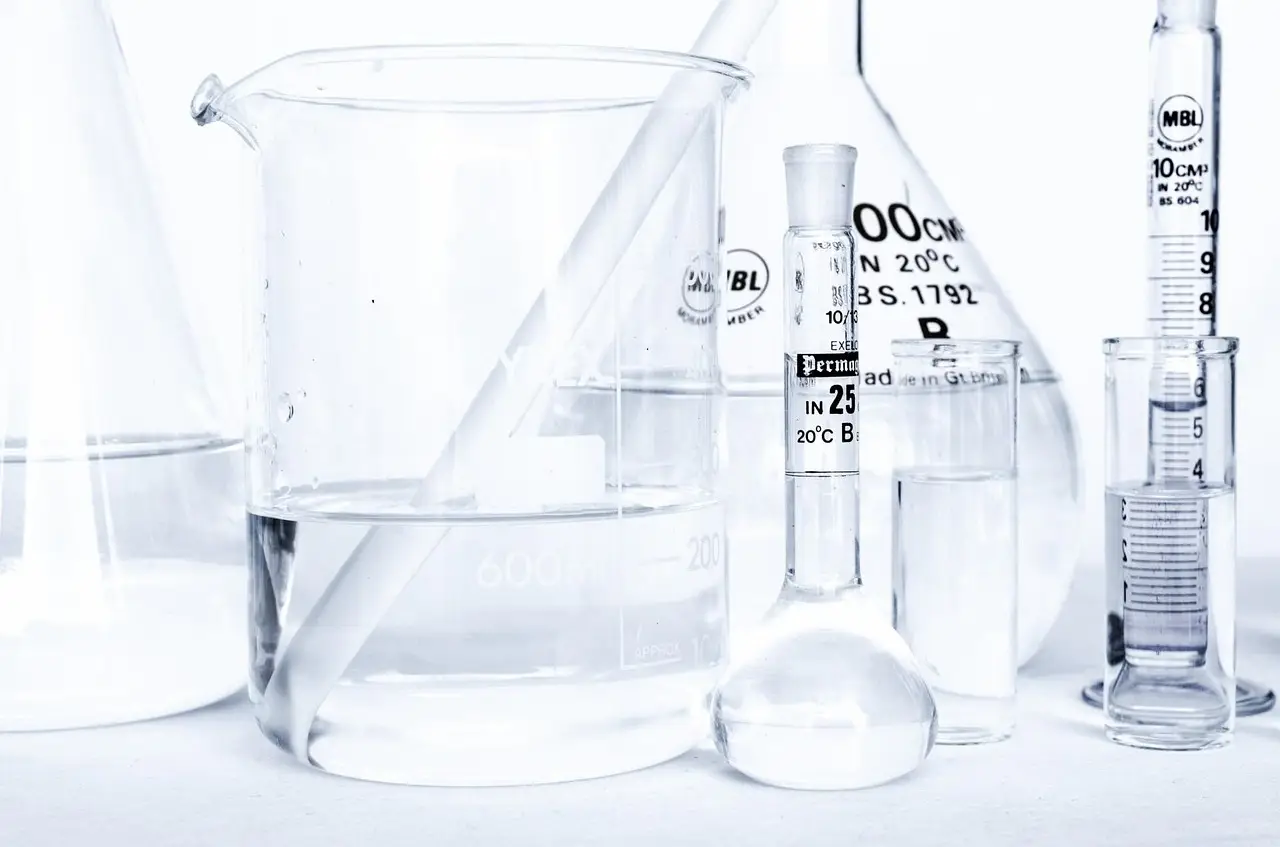
The University of Oklahoma has installed the most powerful microscope in the state. The JEOL JEM-ARM200F transmission electron microscope, known as the NEOARM, now operates in the Samuel Roberts Noble Microscopy Laboratory on the Norman campus.
The National Science Foundation's Major Research Instrumentation Program (a federal grant line for shared research equipment) awarded OU $2.5 million in 2023 to acquire the instrument. The project, award no. 2320468, runs from September 2023 through August 2026.
What does the new instrument change?
The NEOARM resolves materials at 70 picometers in conventional scanning mode, a unit equal to one trillionth of a meter. OU's previous conventional resolution stood at 200 picometers. A newer technique called 4D-STEM pushes the instrument to at least 40 picometers.
That precision lets researchers examine structure and chemistry at the atomic scale, roughly one billionth of a meter. The scale matters for semiconductors, catalysts and 3D-printed components. Laboratory Director Stefan Wilhelm, who also serves as an associate professor in the Stephenson School of Biomedical Engineering, framed the instrument as shared infrastructure.
"Our mission is to provide infrastructure, technical expertise and support for researchers across OU and the state of Oklahoma," Wilhelm said. "These new capabilities will help us advance the cutting-edge materials research going on here and across the nation."
The laboratory serves university researchers and non-university clients. External partners include Oklahoma State University, whose faculty member joined the grant as a co-principal investigator. Project work spans quantum technology, microelectronics and materials discovery.
Why does atomic resolution matter to faculty research?
Senior Research Scientist Julian Sabisch manages the NEOARM. He said day-to-day material properties trace back to atomic arrangement, and he pointed to catalysts that convert methane into hydrogen for electric vehicles as nanoparticles.
"A lot of the macroscopic properties we see in our day-to-day lives are determined on the finest levels by how the atoms are arranged," Sabisch said. "We can see the whole spectrum at SRNML, and this new microscope really fits a large range of the spectrum from all the way to the bottom to fairly far up."
Iman Ghamarian, a co-principal investigator on the grant and an assistant professor in the School of Aerospace and Mechanical Engineering, flagged the data volume as a research problem in itself. "The NEOARM can generate terabytes of data in just one minute," Ghamarian said. "While collecting this data takes only minutes, extracting meaningful scientific insights can require months of analysis. Machine learning offers powerful tools to accelerate this process, uncover hidden patterns and enable discoveries that would otherwise be difficult or even impossible using conventional methods."
How was the instrument installed?
The NEOARM occupies a dedicated room in Lin Hall. Michael Santos, the grant's principal investigator and chair of the Department of Physics and Astronomy, said the room required foam-lined walls to cut noise before the microscope could reach its stated resolution.
"Achieving a stable enough laboratory environment for the microscope was critical," Santos said. "The laboratory in Lin Hall was already state of the art for environmental control, but further renovations were needed for the microscope to reach its best resolution."
What comes next for the laboratory?
Laboratory staff plan to seek a second NSF MRI grant for a focused ion beam scanning electron microscope, an instrument that cuts samples thin enough for electrons to pass between slices. Wilhelm tied the next acquisition directly to the current one.
"In order to really get the most out of this TEM microscope, it all comes down to the sample preparation," Wilhelm said. "This equipment would allow us to have a workflow to both prepare the samples and then analyze them all in one facility."
In short: Oklahoma faculty now have in-state access to atomic-scale imaging, and a follow-on grant application is already in the works.
Google News · Research Funding (Source)
More from James Calloway
Show full bio
Correspondent covering regulation, policy and their impact on Faculty News is the daily press of the at Faculty News.
43 articles