NSF awards $6M for AI recovery of rare earths from coal waste
A four-year, $6 million NSF EPSCoR award pairs microbial leaching and AI controls with coal-waste sites and university research in three states through 2030.
Key takeaways
- The NSF awarded $6 million for a four-year Focused EPSCoR grant launched in November 2026.
- The project runs through August 31, 2030, across Alaska, Wyoming and Montana.
- UAF will execute nearly $913,000 for environmental workflows and bioprocess characterization.
- The United States imports more than 70% of its processed rare earths from foreign suppliers.
- Briggs expects biological recovery to require four or five streamlined operations.
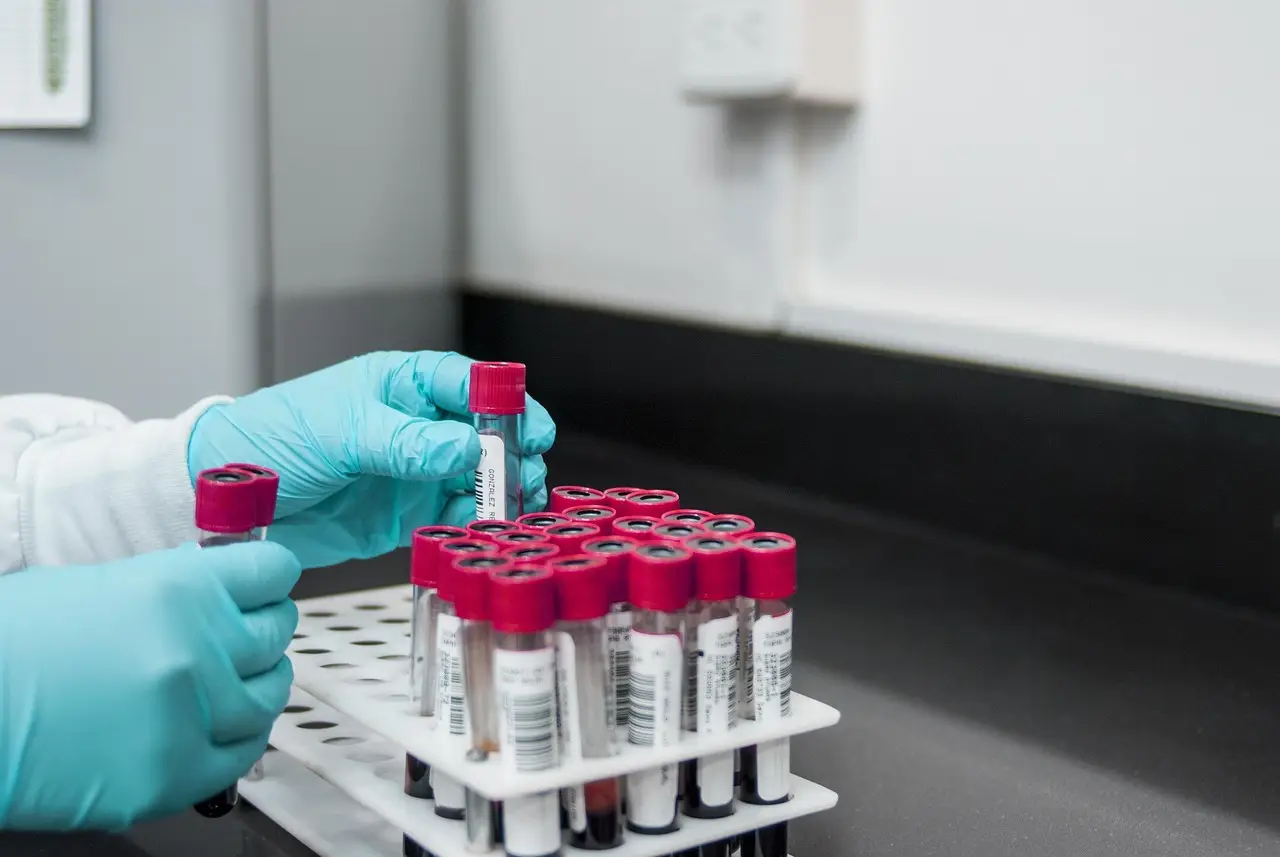
The National Science Foundation awarded a four-year, $6 million grant to an interdisciplinary, Alaska-led consortium combining microbial biotechnology and artificial intelligence to recover critical minerals and rare-earth elements from domestic coal refuse and coal ash.
In November 2026, NSF announced the formal launch of the Focused EPSCoR Collaborations award. The project carries the title “Transformative Bioprocessing and AI-Driven Frameworks for Sustainable Critical Mineral Recovery” and runs through August 31, 2030.
Funding comes through the Established Program to Stimulate Competitive Research’s Research Infrastructure Improvement Program, under the Focused EPSCoR Collaborations track. NSF placed the work within a $39.9 million national infrastructure portfolio spanning multiple EPSCoR jurisdictions and targeting durable scientific infrastructure and national technological priorities.
The award spreads federal capital and institutional infrastructure across four public research institutions. The consortium pairs academic laboratories with mineral-processing facilities to commercialize biological separation across Alaska, Wyoming and Montana.
- University of Alaska Anchorage (UAA), Alaska EPSCoR lead: Administration, microbial bioprocess discovery and predictive AI development. Biological sciences professor Dr. Brandon Briggs is lead principal investigator. The team also includes chemical engineering assistant professor Dr. Subhabrata Dev, electrical engineering assistant professor Dr. Masoumeh Heidari Kapourchali and Dr. Mohammad Heidari Kapourchali.
- University of Alaska Fairbanks (UAF), Alaska: The Institute of Northern Engineering, led by environmental engineering professor Dr. Srijan Aggarwal, will execute nearly $913,000 of the award. Its work covers environmental bioreactor design, bioleaching kinetics, water-quality lifecycle controls and bioprocess characterization.
- University of Wyoming (UW), Wyoming EPSCoR: Tyler Brown leads coal-refuse characterization, mineral-composition analysis and techno-economic modeling. The School of Energy Resources also leads mineralogical profiling and economic assessments.
- Montana Technological University, Montana EPSCoR: Dr. Robin Bullock and Dr. Courtney Young oversee hydrometallurgical validation, downstream precipitation and pilot materials engineering.
How biological recovery replaces solvent extraction
Rare earths comprise 17 chemically similar elements, including neodymium, dysprosium, terbium, europium and yttrium. Conventional production has historically relied on open-pit mining, energy-intensive roasting and aggressive acid leaching. Some chemical flowsheets use hundreds of solvent-extraction stages with concentrated acids and generate substantial hazardous wastewater.
The consortium proposes a less corrosive route. It deploys naturally occurring bacteria, including extremophilic strains harvested from cold Alaskan glaciers and electrochemically active strains such as Shewanella oneidensis. The microbes act on powdered coal refuse and fly ash, release organic acids and transfer electrons across mineral surfaces to selectively dissolve targeted lanthanides.
Briggs expects biological processing to replace multistage solvent circuits with four or five streamlined operations, though variable industrial waste still requires reaction control.
Why AI sits inside the bioreactor
Bench-scale bioleaching has struggled with slow kinetics and feedstock variability. UAA electrical-engineering researchers plan to integrate reinforcement learning and deep neural networks into bioreactor control systems.
Sensors for pH, oxidation-reduction potential, dissolved oxygen and metal ions will continuously feed operating data into models that forecast bioreactor performance, flag suboptimal feedstock samples and adjust microbial nutrient feeds. This should avoid months of empirical trials before each feed or control adjustment.
The feedstock already exists
Telecommunications, electric-vehicle motors, wind turbines and defense avionics require continuous supplies of refined rare earths. The United States imports more than 70 percent of its processed rare earths from foreign suppliers, exposing domestic manufacturers to export restrictions, geopolitical embargoes and supply-chain shocks.
Domestic deposits often contain ore grades too low for economical conventional mining. More than a century of intensive coal mining and power generation has left hundreds of millions of tons of coal-preparation waste and combustion residue in surface impoundments across Alaska, Wyoming’s Powder River Basin and Appalachian basins.
Coal refuse and fly ash therefore offer a domestic mineral feedstock and a remediation target. Reprocessing existing surface impoundments could recover useful materials without opening new open-cast mines.
A multi-state research wager
Briggs said: “The project represents the culmination of a decade of research to develop biotechnology capable of scaling into a viable multi-state enterprise.”
Aggarwal said: “No individual institution could assemble the requisite breadth of skills independently.” He argued that linking environmental engineering, geomicrobiology, mineral processing and automated machine learning creates an integrated platform for resource recovery. No single laboratory can do it alone.
At UW, granular coal-refuse characterization will connect basic microbial discovery with industrial deployment. In an interview with Wyoming Public Media, Tyler Brown said microbial biorecovery is already economical at microscale; the consortium must establish commercial viability and material characteristics for recovering usable resources from industrial waste.
What does this award change for faculty and research offices?
The practical answer includes both new experimental coordination and heavier grant administration. This is a four-year, multi-jurisdictional federal cooperative agreement, not four unrelated grants.
- Sponsored-program staff: The lead must issue subawards and follow pass-through entity monitoring rules in Uniform Guidance 2 CFR 200, including cost accounting, property management for specialized bioreactor hardware and timely reporting of metrics across state lines.
- Subaward managers: Statements of work, pre-negotiated intellectual-property allocations and clear milestones must be settled before cross-institutional work begins.
- Compliance officers: Because the research interfaces with federal dual-use priorities and supply-chain security, they must maintain export-control screening and secure scientific-data management through the award lifecycle.
- Faculty teams: The project connects UAA microbial and AI work, UAF bioreactors, Wyoming characterization and Montana Tech validation, requiring coordinated samples and performance metrics across institutions.
As a federal capacity-building award, the project also requires institutions to align administrative milestones with federal research-infrastructure funding standards.
The delivery test through August 2030
The consortium has three scheduled phases:
- First 18 months: Collect and catalogue samples from Alaskan mines and Wyoming coal basins, then conduct spectroscopy, particle-size distribution analyses and metagenomic sequencing of native bacterial communities.
- Through 2028: Construct continuous-flow benchtop bioreactors coupled with edge-computing AI models, refining reinforcement-learning control loops to maximize extraction kinetics and minimize reagent consumption.
- Final two years, through August 2030: Assemble an on-site modular biorefinery demonstration unit that processes multi-kilogram coal-refuse batches and produces quantitative techno-economic and lifecycle assessments for commercial mining and energy-utility partners.
The endpoint is commercial viability, not merely laboratory extraction.
Google News · Research Funding (Source)
More from Daniel Okafor
Show full bio
Senior reporter covering technology and product news in Faculty News is the daily press of the at Faculty News.
38 articles