Stony Brook Lands Hardware for $22.95M NSF Supercomputer Kitsune
Stony Brook University has received the hardware for Kitsune, a $22.95M NSF-funded supercomputer with 61,000 AMD EPYC cores, 125 Tbyte of memory, and free national access via NSF's ACCESS program for at least five years.
Key takeaways
- NSF awarded a $22.95 million grant funding the Kitsune supercomputer at Stony Brook University
- Kitsune provides 61,000 compute cores, 6.7 Pflops of 64-bit performance, and 125 Tbyte of memory
- The system uses 158 dual-processor compute nodes plus 2 large-memory nodes with 5th Gen AMD EPYC 9965 192-core processors
- Kitsune will run for at least five years and is free to researchers nationwide through the NSF ACCESS program
- ACCESS already supports thousands of U.S. researchers running millions of jobs monthly
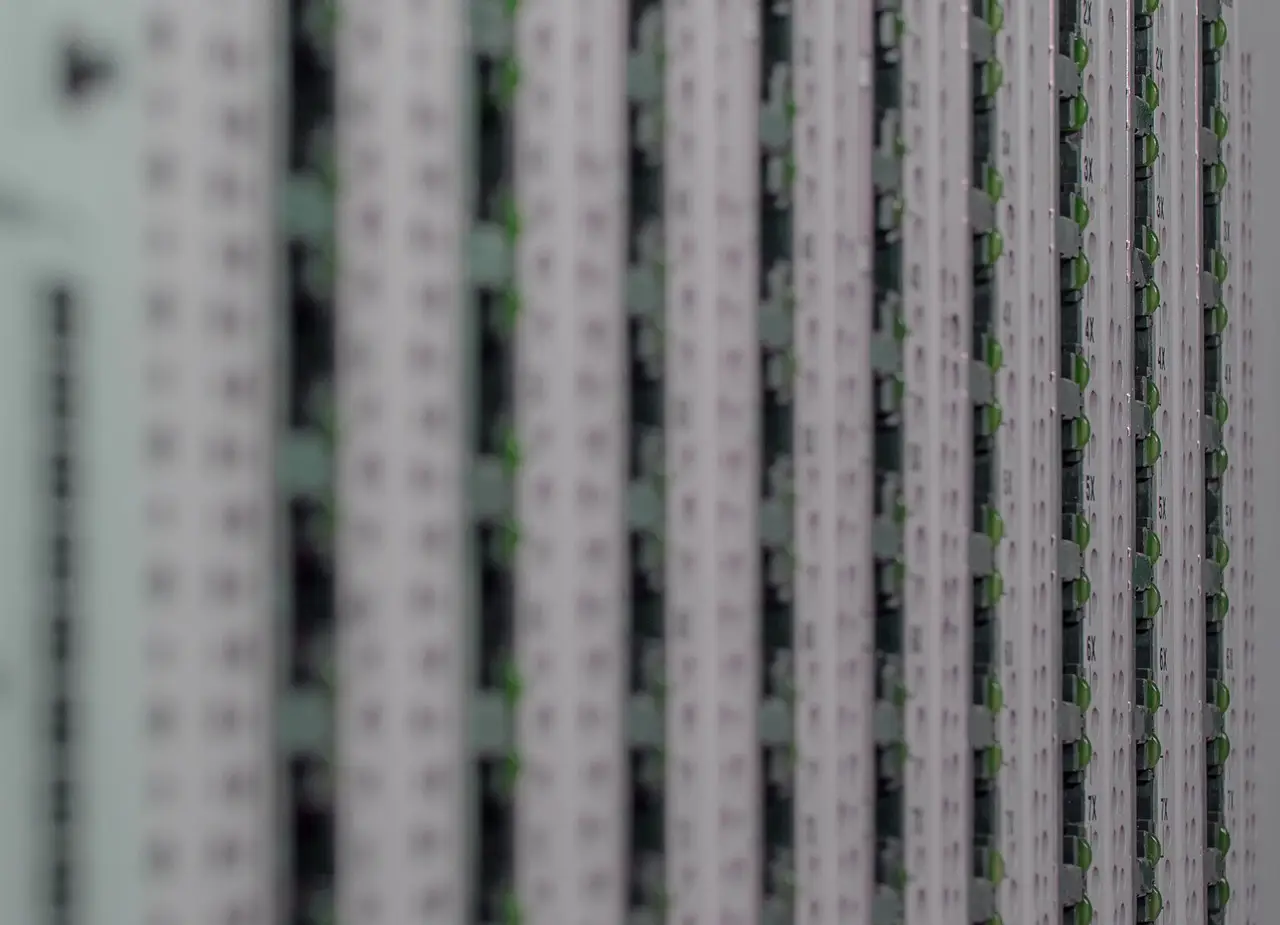
A $22.95 million National Science Foundation grant has just delivered its hardware: Kitsune, a 61,000-core supercomputer now arriving at Stony Brook University's Supercomputing Center. The machine will serve researchers nationwide, at no cost to them, through NSF's ACCESS program.
The hardware landed at the Stony Brook University Supercomputing Center (SBSC) and the Institute for Advanced Computational Science (IACS), working with Research Computing and Innovation and the University at Buffalo. For faculty whose grant budgets never quite stretch to serious computation, that last detail matters: ACCESS (the NSF program that lets U.S. researchers and educators run jobs on national advanced computing systems without paying) already handles millions of jobs a month from thousands of researchers.
"Stony Brook's growing supercomputing capabilities give researchers the tools to tackle questions that were previously beyond reach," said Executive Vice President and Provost Carl W. Lejuez. "As artificial intelligence opens new paths to discovery, Kitsune will help researchers analyze complex data, test new ideas, and deepen our understanding of the world. Through NSF's ACCESS program, we look forward to making this powerful resource available to researchers across the country."
What does the machine actually offer?
The specs are concrete. Kitsune runs on 5th Gen AMD EPYC 9965 processors, 192 cores each, arranged in 158 dual-processor compute nodes plus 2 large-memory dual-processor nodes. Total: 61,000 compute cores.
The system delivers 6.7 Pflops of 64-bit performance and carries 125 Tbyte of memory — figures Robert Harrison, Director of IACS and professor of applied mathematics and statistics, frames as a generational step. Harrison's team counts the machine as a Tier 1 NSF supercomputing center, the successor to Stony Brook's earlier Ookami system.
"Building on the pioneering foundation of Ookami, our new NSF-sponsored Tier 1 supercomputing center—anchored by the 6.7 Pflop (64-bit) Kitsune cluster with 125 Tbyte memory—propels Stony Brook into the era of Agentic AI and high-throughput scientific discovery," Harrison said. "By pairing more than 60,000 next-generation AMD EPYC cores with the interdisciplinary reach of the Institute for Advanced Computational Science, we empower researchers nationwide to run complex simulations and autonomous AI workflows at true production scale."
Per-generation gains matter here. The new EPYC chips offer significantly higher core density and throughput than the previous-generation server processors Stony Brook has run, which translates into larger simulations, more complex models, and heavier data-intensive workloads on the same operational footprint.
Why the name, and how long will it run?
Kitsune is a legendary Japanese fox spirit known for intelligence, magical abilities, and a long lifespan — and, campus lore notes, a close cousin of the Seawolf mascot, Wolfie. The machine will operate for at least five years.
That lifespan is the practical headline for anyone planning a research program around it: a full generation of scientists gets a high-performance, large-memory system built to respond to the priorities of multiple science, engineering, and AI-focused research communities, alongside applications in national cyberinfrastructure.
Who built it, and who gets to use it?
Alan Calder, professor in the Department of Physics and Astronomy and director of SBSC, assembled the project team. He sounded, in the announcement, less like an administrator than a man enjoying his job.
"Putting together a state-of-the-art supercomputer is an adventure and having it serve the national community is very, very rewarding," Calder said. "The next few years will be an exciting time!"
Access runs through the ACCESS data resource program. The NSF designed ACCESS to advance research and teaching goals at no cost to users; every month, thousands of researchers from institutions across the U.S. run millions of jobs on its resources. Kitsune's addition gives the program's computational hardware a timely boost, advances the NSF's mission to promote scientific discovery, and opens the system to a broad range of scientific disciplines.
For faculty who write computational proposals, the practical takeaway is simple: a five-year, no-cost, 61,000-core national resource just came online, and the queue starts forming now.
Google News · Research Funding (Source)
More from Tom Whitfield
Show full bio
News editor covering technology and product news in Faculty News is the daily press of the at Faculty News.
38 articles