Six Boston University Researchers Land NIH MIRA Awards Worth $2 Million Each
Six BU faculty have won NIH Maximizing Investigators' Research Awards, each worth $2 million-plus over five years, spanning drug delivery, mitochondrial DNA, RNA folding and AI microbiome research.
Key takeaways
- Six Boston University researchers received NIH Maximizing Investigators' Research Awards, each worth over $2 million across five years.
- Recipients span ENG, CAS, the Faculty of Computing & Data Sciences and the Chobanian & Avedisian School of Medicine.
- Maria Kamenetska also holds a $1.35 million Gordon and Betty Moore Foundation Experimental Physics Investigator award.
- MIRA grants fund investigators' broader vision rather than a fixed set of specific aims, unlike conventional grants.
- Chao Zhang's lab will release its AI microbiome tools as open source.
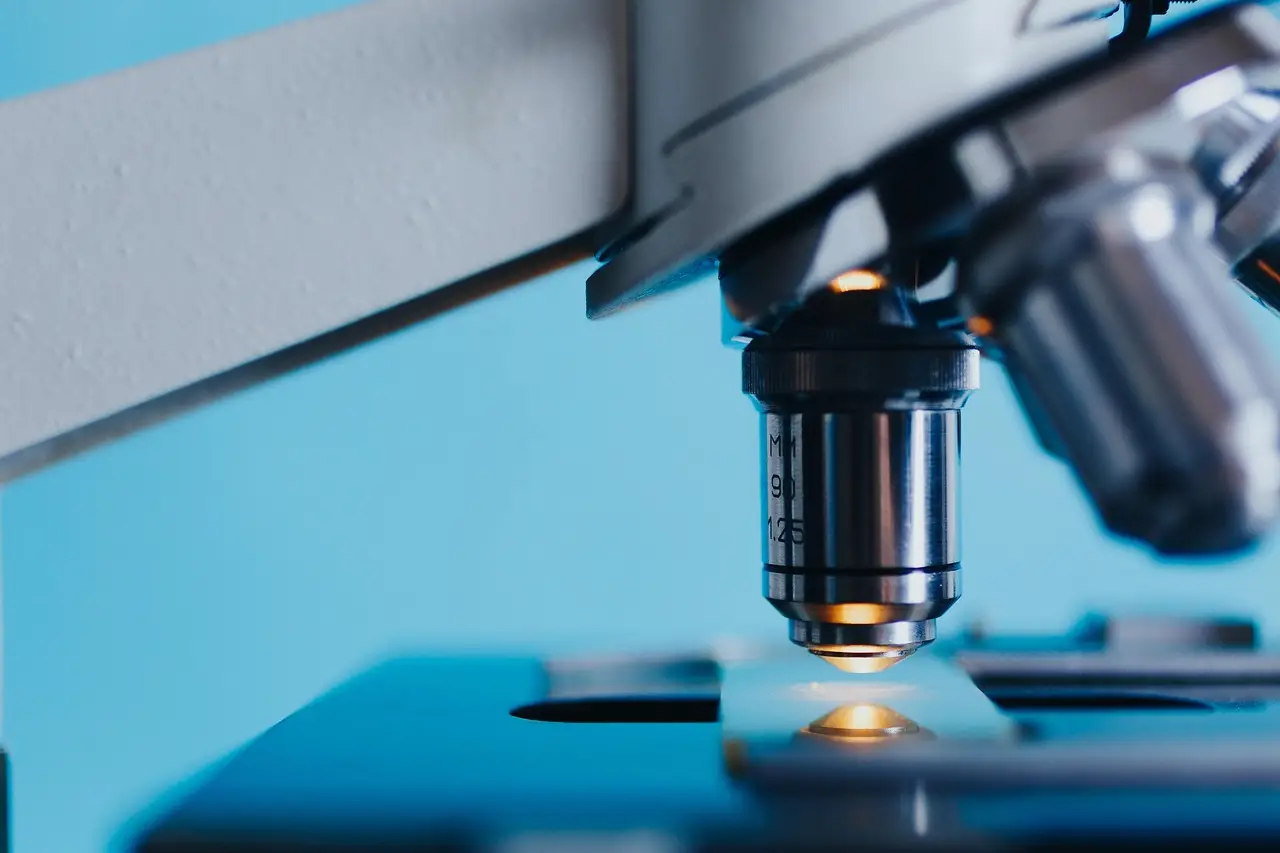
Six Boston University faculty members have won Maximizing Investigators' Research Awards (MIRA) from the National Institutes of Health, each carrying more than $2 million in funding over five years. The awards go to both established and early-career investigators, and recipients span the College of Engineering, the College of Arts & Sciences, the Faculty of Computing & Data Sciences, and the Chobanian & Avedisian School of Medicine.
For faculty who write grants for a living, the MIRA mechanism matters as much as the money. Unlike a conventional R01, the award funds the investigator's broader research vision rather than a fixed set of specific aims.
What does the MIRA flexibility change for PIs?
Several recipients made the same point in different words: five years of sustained, aim-flexible funding changes what a lab can risk.
Karen Allen, a CAS professor of chemistry with additional appointments at ENG and the medical school, put it directly: "The MIRA is a great mechanism because it is not restricted to specific aims, allowing the researcher to extend the program in new directions."
Chao Zhang, a medical school assistant professor of computational biomedicine, framed the same advantage through the lens of fast-moving methods. "A conventional grant commits you to a specific set of aims for five years," he said. "Biology does not cooperate on that schedule, and in a fast-moving area like AI, the best method five years from now almost certainly is not the one I would have written down today."
For Samagya Banskota, a College of Engineering assistant professor of biomedical engineering, the structure suits early-career labs in particular. Sustained five-year funding, she said, "makes it possible to pursue high-risk, high-reward projects" and take "scientific risks that might otherwise be difficult to undertake."
Stefan Isaac, an assistant professor of biochemistry and cell biology at the medical school, cited a quieter benefit: "something incredibly important for a new lab: stability." The award, he said, gives "the security to continue building the research program and, most importantly, to support the students and researchers who have committed themselves to this work."
Pawel Przytycki, an assistant professor in the Faculty of Computing & Data Sciences, called the grant "foundational for launching my lab" and said it "will enable large-scale, multi-year projects."
What will the six labs actually study?
Samagya Banskota (ENG, biomedical engineering). Her lab works on delivering gene-editing drugs for rare diseases. Many drug carriers, such as the fatty particles carrying mRNA in some vaccines, "naturally accumulate in the liver," she said, which "limits our ability to develop effective therapeutics." Her group studies how delivery systems interact with the body's biological environment to direct therapeutics to the tissues that need them.
Karen Allen (CAS chemistry; ENG; medical school). In a partnership with MIT colleagues running more than a decade, her lab has been "mapping how these enzymes work, their structures, and how they recognize their specific sugar substrates among hundreds of possibilities." The enzymes build sugar chains that let bacteria stick to human cells and evade the immune system. The holy grail: predicting, from a bacterium's genome sequence, the exact sugar chains it builds — a predicate to new therapies.
Stefan Isaac (medical school). Mitochondria, "the powerhouses of the cell," carry their own DNA. Isaac studies how cells regulate the activity of individual mitochondrial genomes as energy needs change, and what happens when those regulatory mechanisms break down — a failure associated with cancer and neurodegenerative disease. He is also developing tools to study individual mitochondrial genomes, approaches he hopes will serve the broader research community.
Pawel Przytycki (Computing & Data Sciences). His convergent program spans biology, computer science and statistics, with medical school collaborations. He builds computational models of how cells shift through dynamic states during development and disease progression, with "the long-term goal of improving our ability to understand the progression of diseases and allow for earlier interventions."
Maria (Masha) Kamenetska (CAS chemistry and physics; ENG). She studies RNA molecules at the single-molecule level. RNA folds into shapes that help control which genes switch on and off, and those shapes can change in a fraction of a second. Her lab uses laser-based microscopic tweezers to grab an RNA molecule at both ends and pull it apart, observing folding and unfolding in real time. The goal is better design of therapeutics and nanotechnologies for diseases tied to RNA or DNA misfolding. She also recently received $1.35 million as a Gordon and Betty Moore Foundation Experimental Physics Investigator. The MIRA, she said, is "a gratifying endorsement of my lab's single-molecule biophysics approaches."
Chao Zhang (medical school, computational biomedicine). His lab applies AI to how human-microbiome interactions change over time. "Every one of us carries trillions of microbes, mostly in the gut, and they are in constant conversation with our own cells," he said. "That conversation shapes immunity, metabolism, how we respond to drugs, and how certain cancers get started. My lab is building the computational tools to listen in on it." With colleagues at Boston Medical Center, BU's primary teaching hospital, his group is developing rapid, noninvasive tests to improve cancer treatments and exploring whether microbes could serve as a cancer early-warning system. Any AI tools the lab develops will be open source.
Why it matters beyond BU
The batch of awards illustrates where NIH is placing flexible-investigator bets: gene-editing delivery, enzymology, mitochondrial biology, computational cell modeling, single-molecule biophysics and host-microbiome AI. Every project in the cohort aims upstream of the clinic.
Five years of aim-agnostic money is the common thread.
Google News · Research Funding (Source)
More from Marcus Bennett
Show full bio
Market editor covering companies, deals and strategy in Faculty News is the daily press of the at Faculty News.
34 articles