Waterloo names Matina Kalcounis-Rueppell provost for five years
Matina Kalcounis-Rueppell will become Waterloo’s vice-president, academic and provost on July 1, 2027, serving a five-year term after overseeing three faculties in Alberta.
Key takeaways
- Kalcounis-Rueppell starts as Waterloo’s vice-president, academic and provost on July 1, 2027.
- Her appointment runs for five years.
- She is dean and vice-provost of Alberta’s College of Natural and Applied Sciences.
- She oversees three faculties.
- She will also hold a faculty appointment in Waterloo’s biology department.
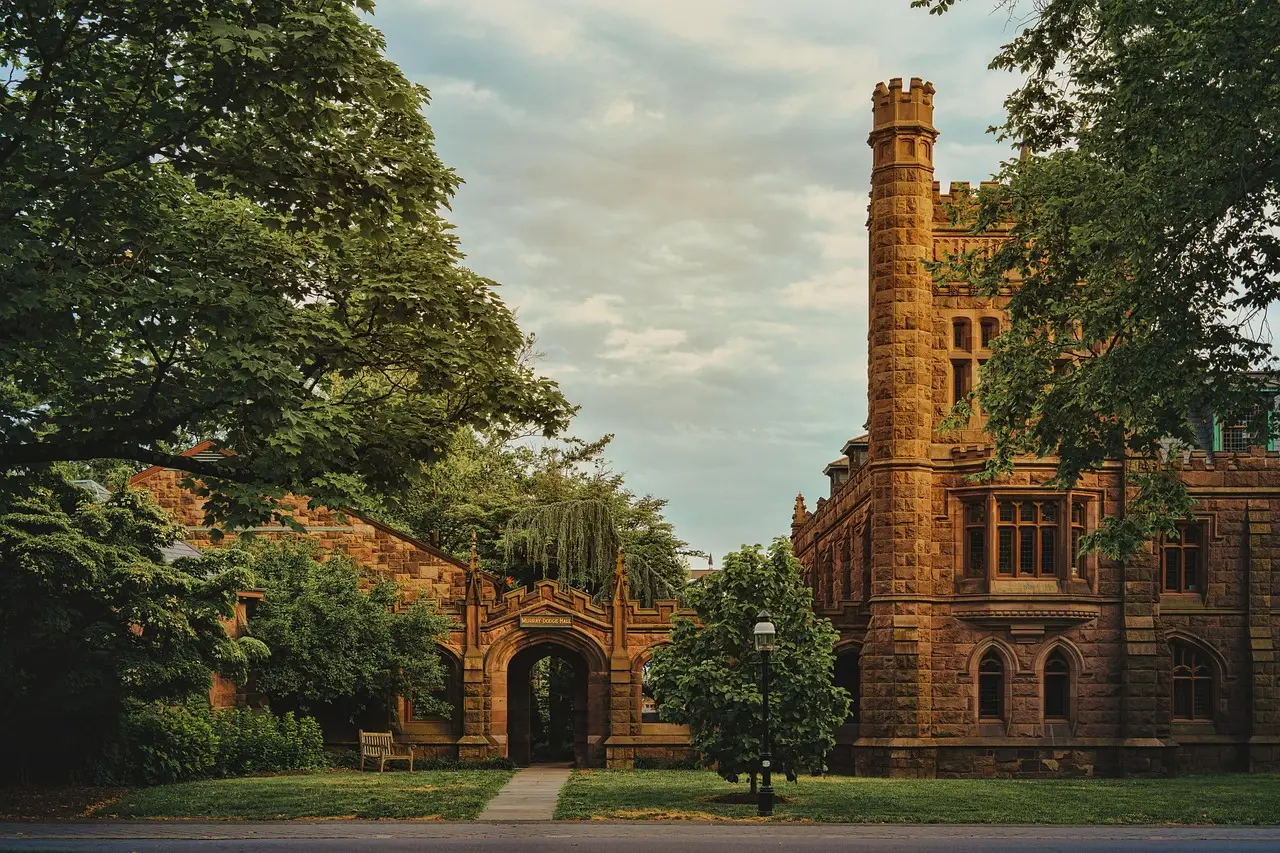
Matina Kalcounis-Rueppell will become the University of Waterloo’s vice-president, academic and provost on July 1, 2027, on a five-year term. In that post, she will serve as the university’s chief academic and operating officer and lead its academic mission.
At Waterloo, the appointment combines institution-wide responsibility with a direct connection to a department. Kalcounis-Rueppell will also hold a faculty appointment in biology. The announcement does not say what share of her time each role will consume, whether the faculty appointment carries a particular rank or what teaching load she will carry.
What experience does she bring?
Kalcounis-Rueppell comes to Waterloo from the University of Alberta, where she serves as dean and vice-provost of the College of Natural and Applied Sciences. She oversees three faculties.
The Waterloo announcement describes those faculties as representing a significant portion of Alberta’s research and education activity. Her remit therefore connects her with a substantial institutional portfolio.
The release does not name the three faculties or quantify the “significant portion.” It gives the scale of her current remit but leaves her Waterloo portfolio undefined.
Takeaway: Her Alberta remit establishes relevant scope, but the announcement does not define its full workload.
Why did Waterloo select her?
In a Tuesday news release, UW president Bill Rosehart said: “Dr. Kalcounis-Rueppell combines a deep commitment to academic excellence with the experience needed to lead within a large, complex research-intensive university.”
Rosehart’s statement offers two grounds for the appointment: a stated commitment to academic excellence and relevant leadership experience. The second rests on her Alberta post and on Waterloo’s description of itself as a large, complex research-intensive university.
The release does not describe the search, the candidate pool, the selection criteria or the approval process. For faculty governance, that distinction matters: a presidential endorsement does not show who evaluated the candidates or what criteria carried weight.
Takeaway: The endorsement is strong, but the selection record remains thin.
What has she promised to do?
Kalcounis-Rueppell said: “I am excited and honoured to join the University of Waterloo community as provost.” She added: “Waterloo has a renowned reputation for academic excellence, transformative experiential education at scale, and innovative research that translates into impact. I look forward to working collaboratively with students, faculty, staff, and leadership to advance the university’s priorities.”
Her statement has three practical elements: satisfaction at the appointment, an account of Waterloo’s academic strengths and a commitment to collaborative work. The final element promises advancement of “the university’s priorities,” but the announcement does not define those priorities or attach dates, benchmarks or responsible officers.
Nor does it state positions on tenure clocks, faculty credit loads, indirect-cost rates, bargaining units or accreditation standards. Faculty senators can identify the general direction, but they cannot test it against an operating plan or institutional calendar.
Takeaway: The pledge establishes collaboration, not a measurable agenda.
What remains undefined in her faculty role?
Beyond the central appointment, Kalcounis-Rueppell will hold a faculty position in UW’s biology department. The announcement describes her as an internationally recognized researcher into mammals, including their behaviour, conservation and bioacoustics, the communication of animals through sound.
That profile gives the dual appointment a defined scholarly dimension. It connects the provost’s administrative portfolio with a specific research specialty.
The release does not list her publications, grants, planned Waterloo projects, laboratory resources or research-support arrangements. Her arrival may raise questions about how teaching credit, research support and administrative service will fit into her workload, but the announcement sets none of those terms.
Takeaway: The faculty post adds research depth, but its operating terms remain unspecified.
Google News · University Governance (Source)
More from Elena Vasquez
Show full bio
Staff writer covering technology and product news in Faculty News is the daily press of the at Faculty News.
40 articles