UN Experts Urge Campus Protection Against Transnational Repression
More than 130 UN experts urged coordinated action in September 2026 as reports document threats to international students, faculty and academic freedom worldwide.
Key takeaways
- September 2026: More than 130 UN experts issued a joint statement calling for coordinated action against transnational repression.
- 2015-2025: Freedom House documented 1,375 direct physical incidents involving 54 perpetrator governments across 107 countries.
- 2009 onward: Iranian authorities targeted Masih Alinejad’s family, and operatives later plotted to kidnap and assassinate her in Brooklyn.
- 16: Utah public campuses must provide dedicated educational resources and confidential reporting pipelines under Policy R267 and H.B. 547.
- Article 19: The International Covenant on Civil and Political Rights protects expression and information flows regardless of frontiers.
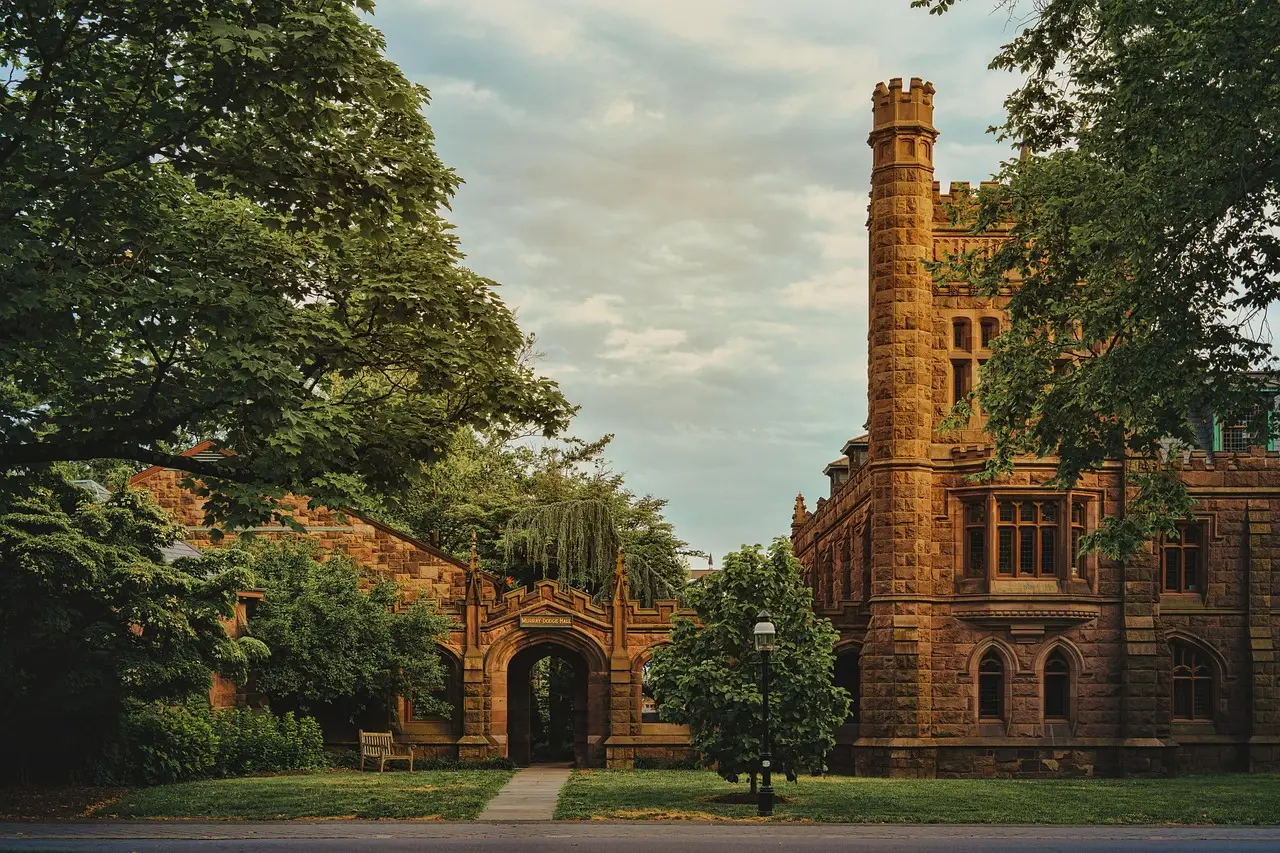
At the UN Human Rights Council’s 63rd session in September 2026, more than 130 UN Special Procedure mandate holders and Treaty Body members—experts who issue UN guidance or oversee treaty-body work—issued an unprecedented joint statement demanding coordinated international action against transnational repression.
Activists in every sector may face surveillance or violence, but the warning lands hardest on universities, where threats to relatives can chill speech and research. Sarah R. Creedon, a Technology & Human Rights Fellow for 2026-27 at Harvard Kennedy School, writes that “academic institutions have emerged as a particular frontline — and they are almost entirely unprepared for it.” Her views do not necessarily represent the Carr-Ryan Center for Human Rights or Harvard Kennedy School.
What does transnational repression mean?
Transnational repression, or TNR, is a foreign government’s deliberate effort to intimidate, silence, coerce or harm dissidents, human rights defenders and diaspora members beyond its national borders. Methods include targeted killings, extraterritorial legislation, cross-border surveillance, commercial spyware, cyberhacking and law-enforcement operations abroad.
Those tactics breach the Universal Declaration of Human Rights and conventions including Article 19 of the International Covenant on Civil and Political Rights, which protects expression, opinion and information flows regardless of frontiers. When a state stalks targets or plots rendition abroad, it also infringes host-state sovereignty.
Freedom House documented 1,375 direct physical incidents between 2015 and 2025, involving 54 perpetrator governments across 107 countries. The scale makes TNR a systemic threat to free expression, state sovereignty and academic integrity.
The threat crosses borders, so campus protection cannot stop at campus gates.
How grave is the danger?
For years after she fled Iran in 2009, Iranian authorities tried to silence exiled journalist and activist Masih Alinejad by targeting family members who remained in Iran. The threat eventually moved to her door.
State-backed operatives mapped a plot over several years to kidnap and assassinate her at her Brooklyn home, a conspiracy documented by the Federal Bureau of Investigation, Department of Justice and civil-society groups. U.S. law enforcement intervened before the plan could proceed.
At the same UN session, Hong Kong democracy advocate Anna Kwok exposed extraterritorial coercion and pressed for concrete protection for human rights defenders.
The Office of the United Nations High Commissioner for Human Rights, the International Service for Human Rights and UN member states say governments have a positive duty to protect people within their jurisdiction from foreign interference. The framework also includes joint statements, UN Special Procedure reports and Human Rights Council resolution HRC 58/23 on defenders in the digital age.
Officials can move from intimidation to attempted assassination.
Why are universities on the frontline?
Overseas students, faculty and visiting researchers face monitored demonstrations, threats to relatives at home, pressure to limit research and lobbying to cancel critical events.
- Australia: Human Rights Watch found widespread self-censorship among Chinese pro-democracy students; academics recommended anonymous grading and secure research channels.
- Canada: Amnesty International’s 2024 investigation found systematic coercion and surveillance targeting diaspora students at universities; Canada’s Public Inquiry into Foreign Interference exposed the issue further.
- United Kingdom: The country has adopted TNR policies, while the University of Bristol’s comprehensive study found that most student victims were human rights activists.
- European Union: The Council of Europe’s 2025 series described TNR as a primary “blind spot” in European academic freedom frameworks.
- Switzerland: Federal Council-commissioned studies through the University of Basel documented persistent surveillance of Tibetan and Uyghur scholars. Universities rely on generic Swiss Criminal Code Article 271, not dedicated support.
- United States: Students and academic community members have been photographed and recorded for pro-democracy protests. Relatives in protesters’ countries of origin have faced harassment, and authorities have discouraged them from studying overseas.
Freedom House’s 2024 campus report identifies the Chinese government as the biggest threat to international students and scholars in the United States, followed by Egypt, India, Rwanda and Saudi Arabia.
A university that cannot distinguish pressure from ordinary dispute management will struggle to protect academic freedom.
What do campus policies already show?
- The University of Wisconsin–Madison’s International Safety and Security office treats transitional repression as a key risk area.
- The University of North Texas provides an information sheet defining TNR, tactics, warning signs and resources.
- Kansas State University created Transnational Repression Resources and Complaint Procedure, Chapter 3014 of its Policy and Procedures Manual, with designated campus-safety and legal liaisons trained in state-backed coercion.
- Utah System of Higher Education Policy R267, enacted through H.B. 547, requires all 16 public campuses to provide dedicated educational resources and confidential reporting pipelines for international students and faculty facing extraterritorial threats.
These models show that institutions need named offices, trained personnel and confidential reporting routes.
How can universities close the protection gap?
- Train. Give faculty, deans, student-affairs staff, senior administrators and general counsel specialized instruction in proxy intimidation, digital tracking and overt foreign pressure. Use real cases; flag repeated contact from country representatives and recordings of campus events by state or coerced actors. Human-rights offices should watch for scholars from countries that repress expression.
- Report. Create confidential channels and urgent action plans for faculty, students and visiting researchers. If harm appears imminent, senior administrators should contact relevant law-enforcement agencies immediately and use victim-centered protocols that put safety first.
- Speak. Publish TNR policies and explicit public commitments that frame the issue as part of academic freedom and freedom of expression. Publicly denounce specific incidents; silence only emboldens the regimes using coercion and increases danger to the target and institution.
- Protect. Audit software, learning-platform and database procurement through human-rights due diligence. Set data-protection and cybersecurity controls against unauthorized cross-border transfers, commercial spyware, phishing, hacking, online intimidation and smear campaigns, while providing physical protection for targeted people.
The proposals draw on Amnesty International’s 2024 reports “On My Campus I Am Afraid” and “Surveillance, Censorship and Harassment of Chinese International Students in Canada,” Human Rights Watch’s 2019 “Code of Conduct for Responding to Threats to Academic Freedom,” the Council of Europe’s 2025 “Academic Freedom Insights Series,” Freedom House’s 2024 campus report and OHCHR guidance.
Institutional protection must become routine practice, not an improvised response after a threat becomes public.
ohchr.org (Original)
More from Tom Whitfield
Show full bio
News editor covering technology and product news in Faculty News is the daily press of the at Faculty News.
38 articles