59% of Students Have Weighed Dropping Out Over Money
Fifty-nine percent of students weighed dropping out over financial stress in 2024, an Ellucian report finds, as tuition rose 24% in two decades and Arizona offers no state-based aid.
Key takeaways
- 59% of college students considered dropping out in 2024 due to financial stress, per Ellucian
- In-state tuition at public national universities rose 24% over two decades, inflation-adjusted, per U.S. News 2026
- Only 30% of 2025 graduates secured full-time jobs in their field, down from 41% in 2024, per NextGen Personal Finance
- Arizona has no state-based financial aid, ASU President Michael Crow said
- Nearly 80% of students reported finances negatively affecting their mental health
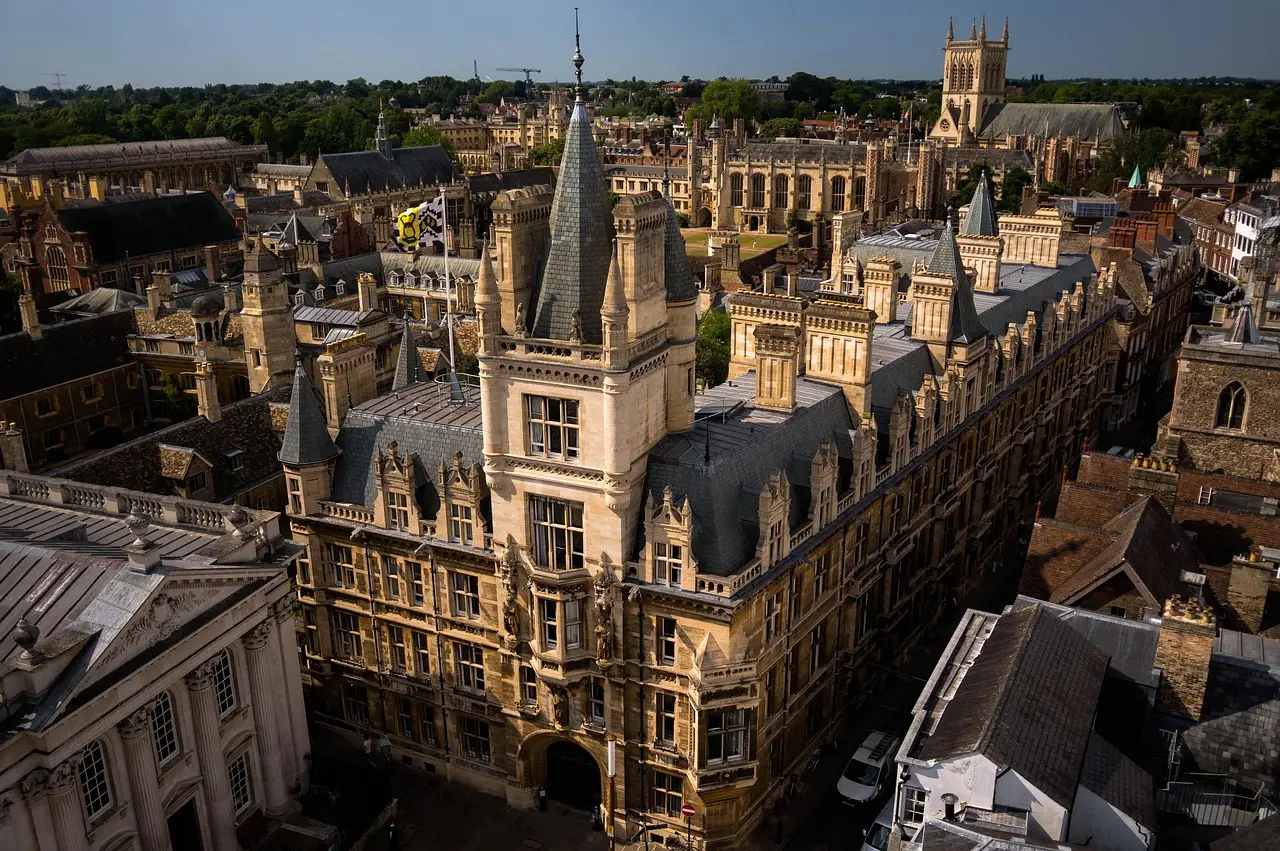
Fifty-nine percent of college students considered dropping out in 2024 because of financial stress, and nearly 80% said money problems had damaged their mental health, according to a 2024 Ellucian report. Those figures frame a student debt story reported by The State Press at Arizona State University, where students and faculty name a specific cause: state legislatures stopped funding students two decades ago, and the bill moved to families.
What happened to Jessica Scalise?
Jessica Scalise enrolled at ASU drawn by its culture and its promises of financial assistance. She found that the fine print of university brochures did not apply to her. After extensive scholarship applications, the only aid offered was a Parent PLUS Loan her family could not accept. She dropped out.
"I've always been very aware of the kind of family that I come from and where I stand financially, and I'm OK with that," Scalise said. "Afterward, moving forward, it felt like I was deceived."
She stayed in Oregon, reconsidered college, and chose esthetician school instead. She said colleges mislead low-income students and that the experience made her feel she did not matter.
"Colleges say, 'We love a first-generation student. We want first-generation students,'" Scalise said. "That definitely was something that they're pushing as a promise, and that's something that was never granted."
Her closing request was simple: "What I would have wanted is someone who was advocating for me."
One student's aid package failed her; the question is how many offers of "first-generation welcome" survive contact with a real bill.
Who pulled the money out?
Adjusted for inflation, in-state tuition and fees at public national universities rose 24% over the past two decades, according to U.S. News & World Report in 2026. Robert Kirsch, a professor at ASU's School of Applied Professional Studies, said a lack of state funding forced universities to recover the cost through tuition.
ASU President Michael Crow put it more bluntly.
"Legislature quit funding students 20 years ago, and so we operate on an institution that is basically operates as what we call a public enterprise," Crow said. He noted Arizona is one of the states with no state-based financial aid.
"There's two really big pressures acting on American higher education right now. The first is the withdrawal of state funding," Kirsch said. "The other dynamic that's happening ... is there's a sense that students who are paying more in tuition start looking at the educational relationship as one of a consumer relationship."
Kirsch said that shift pushes students to ask what their money buys — the most luxurious dorms, meal plans and gyms — and that universities use those amenities to justify the price. Students who cannot afford tuition in the first place absorb the strain.
"I've had students that work 40 hours a week while doing five or six classes in a semester," Kirsch said. "Psychologically, physically, emotionally, socially and in all of these ways, it's a really taxing experience."
Takeaway: a five-course load plus a full-time job is now a documented working condition, not an outlier's badge.
Is the degree oversold?
Imran Vilyakhunov, a sophomore studying nursing, said college is romanticized for children to push attendance.
"The whole glamorization of getting a degree is that you get a well-paying job," Vilyakhunov said. "That ultimate six-figure job, white-collar sort of situation. That's really what ends up pushing people into college."
He said students arrive with the degree "built up in your head" since childhood, even without a career plan.
"You never go into high school and people are talking to you about, 'What do you think of being an electrician?'" Vilyakhunov said.
The payoff data sharpen his point. Only 30% of college graduates in 2025 secured full-time positions related to their field of study, down from 41% of 2024 graduates, according to NextGen Personal Finance.
Kirsch said the burden of choosing the right major adds psychological stress. He described the mentality as being "condemned to a life of peonage" if a student picks the wrong major.
"If you're not sure, you're putting yourself in a really disadvantageous position where you could be paying that off for a long time," Vilyakhunov said. "It's just not financially smart at the end of the day."
Two-thirds of 2025 graduates did not land jobs in their field; the promised return on the loan is becoming the exception.
What can change it?
Kirsch offered no single fix. But he argued the leverage sits with students.
"Students should know and feel comfortable in the knowledge that they are the reason that this campus exists. It's your campus," Kirsch said. "Students have an enormous amount of collective power to change the way that universities are run and the decisions that are made."
That is a faculty member's claim, not a demonstrated result; no organized student effort appears in the record yet. What the record does show is arithmetic: tuition up 24%, state aid absent in Arizona, field-related employment at 30%, and students working 40-hour weeks to stay enrolled.
The promises in the brochures were cheap. Keeping them costs money nobody has committed.
Google News · Higher Education (Source)
More from Elena Vasquez
Show full bio
Staff writer covering technology and product news in Faculty News is the daily press of the at Faculty News.
40 articles