NIH Grants $2.1 Million to Pitt Spinout Building Biodegradable Stent Alternative
NIH's NHLBI has awarded Pitt spinout EV2 Technologies $2.1 million over two years to advance Biocarpet, a biodegradable unfurling sheet for peripheral artery disease.
Key takeaways
- NIH NHLBI awarded EV2 Technologies a two-year, $2.1 million SBIR Direct-to-Phase II grant.
- Biocarpet is a fully biodegradable sheet that unfurls in diseased vessels to treat peripheral artery disease, which affects 12 million Americans.
- A six-month animal study on safety and efficacy will follow benchtop testing of improved prototypes.
- CEO Ali Behrangzade earned his Pitt bioengineering doctorate in 2022; the NIH Catalyze grant in 2023 allowed the team to skip Phase I SBIR.
- The award enables EV2 to formally license the technology from the University of Pittsburgh for the first time.
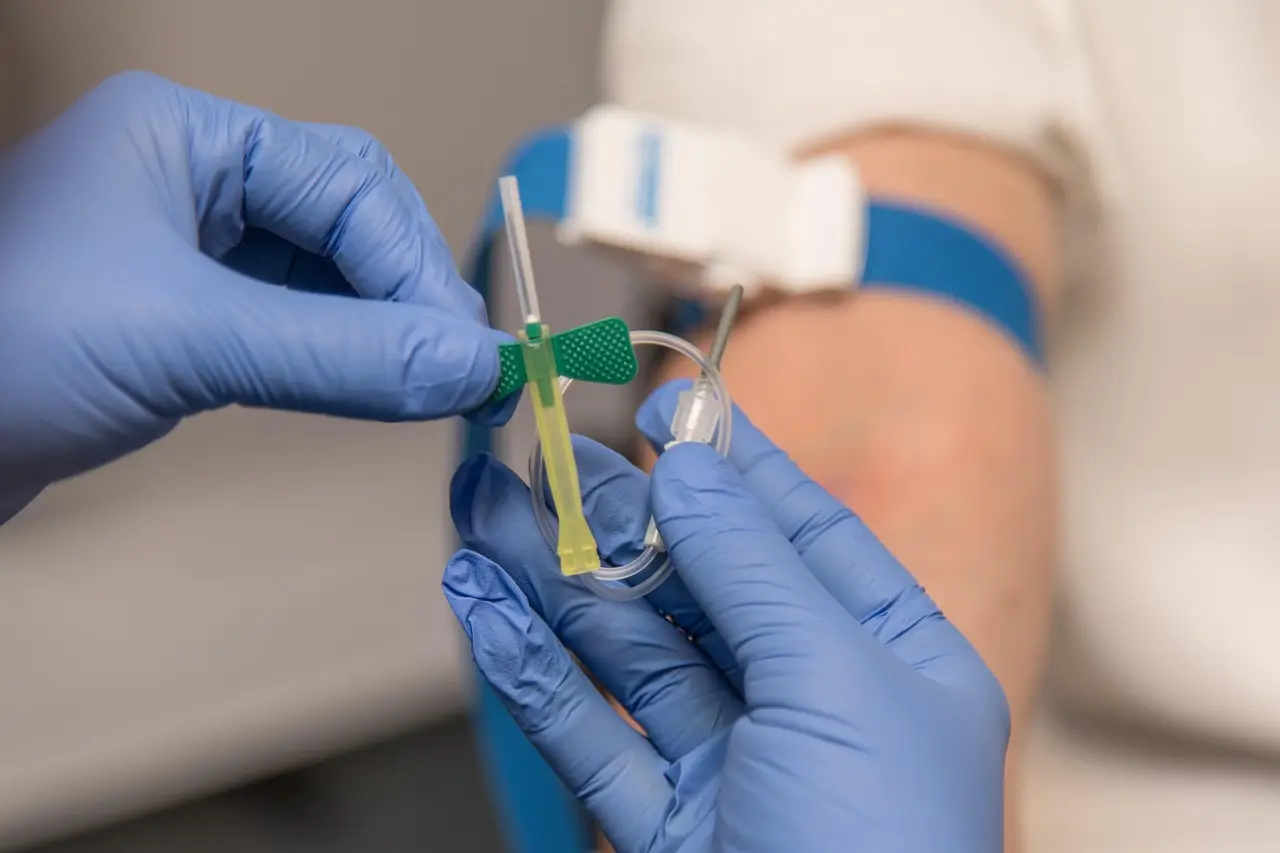
A two-year, $2.1 million Small Business Innovation Research Direct-to-Phase II grant from the National Institutes of Health will fund the next stage of EV2 Technologies, a startup spun out of the University of Pittsburgh that is developing a fully biodegradable endovascular device for peripheral artery disease. The award, issued by the NIH's National Heart, Lung, and Blood Institute, is non-dilutive — meaning the founders keep their equity — and it supports preclinical development of a device called Biocarpet over the coming two years.
The condition Biocarpet targets is large in scale. Peripheral artery disease affects more than 12 million people in the United States and roughly 200 million worldwide, and it drives sustained demand for interventions that relieve severe arterial blockages.
Why stents fall short
Conventional stents, while common, do not fit small or winding arteries, and they often fail after implantation — particularly in vessels that cross joints. Jonathan Vande Geest, an EV2 co-founder and professor of bioengineering at Pitt's Swanson School of Engineering, frames the problem in biomechanical terms. Blood vessels are not just straight tubes, he noted, and they can become a very complex biomechanical environment as people age.
Biocarpet was invented to conform to that complicated vascular anatomy. The device is a fully biodegradable sheet that unfurls inside diseased blood vessels, with the explicit design goal of reducing the likelihood of restenosis — the re-narrowing of a treated vessel that plagues current interventions.
Who is building it
The founding team is entirely rooted in Pitt. Ali Behrangzade, who completed his bioengineering doctorate at Pitt in 2022, serves as chief executive officer and principal investigator on the grant. William R. Wagner is a bioengineering distinguished professor. John Pacella is an associate professor at Pitt's School of Medicine who also practices as an interventional cardiologist at the University of Pittsburgh Medical Center. The underlying technology, the company notes, represents the culmination of multiple years of collaborative academic research at the university.
What does the grant actually fund?
The $2.1 million will flow across several interrelated preclinical tracks:
- Manufacturing refinement, to lay the foundation for eventual scalability.
- A redesign of the specialized thermal balloon catheter required to deliver and deploy the unfurling sheet within targeted vessels.
- A control console engineered for broad compatibility across standardized clinical catheterization laboratories.
- Benchtop testing of the improved prototypes across a wide range of conditions.
- A six-month animal study, following the benchtop work, to assess safety and efficacy.
The two-year clock makes that sequence tight. Benchtop testing precedes the animal model, and the manufacturing and catheter work run in tandem.
A translational runway built step by step
The path to a Direct-to-Phase II award did not begin with this application. Proof-of-concept work started in 2019, when Pitt's Center for Medical Innovation provided early funding for benchtop feasibility demonstrations. Institutional venture programs then stacked awards on that foundation: the Wells Student HealthTech Challenge, the Randall Family Big Idea Center Pitch Competition, and the Pitt Innovation Challenge.
A decisive shift came in 2022, when Behrangzade joined the university faculty full time, enabling dedicated experimental campaigns that generated critical quantitative datasets. In 2023, Vande Geest secured an NIH Catalyze grant with Behrangzade as co-investigator and project lead. That funding allowed the team to bypass the traditional Phase I SBIR process entirely, and the resulting data underwrote the successful Direct-to-Phase II application now paying for the current work.
For faculty observers, the sequence is a case study in how federal translational mechanisms compound. One catalytic grant became the evidence base for a larger one.
Licensing and what comes next
The award also marks a turning point in the company's relationship with its home institution. For the first time, EV2 has the resources to formally license the underlying technology from the University. Going forward, the company plans a balanced capital strategy that combines non-dilutive public research grants with private venture capital investment.
Vande Geest credits institutional infrastructure for the technology's progress. Without support from programs including the Office for Innovation and Entrepreneurship, the Center for Medical Innovation, the McGowan Institute for Regenerative Medicine, LifeX, and the NHLBI, he said, the technology would not be where it is today.
Google News · Research Funding (Source)
More from Daniel Okafor
Show full bio
Senior reporter covering technology and product news in Faculty News is the daily press of the at Faculty News.
38 articles