Author of "Why Machines Will Never Rule the World": AI Cannot Replace Human Thought
The co-author of "Why Machines Will Never Rule the World" argues AI's mathematical limits rule out machine intelligence, and that colleges must simply restore minimum standards of human effort.
Key takeaways
- The essay's central claim: models needed for cognitive behavior in open-ended, thermodynamically complex, non-ergodic environments are not achievable.
- The author rejects both AI-doom policy and David Randall's agnosticism in Minding the Campus.
- AI reliability for research is called highly uncertain; it suffices only for low standards of education.
- Mathematicians are the exception, gaining a competitor that forces new skills rather than a shortcut tool.
- The essay closes with "Don't Panic!" and a call to restore minimum expectations dating to Wilhelm von Humboldt's era.
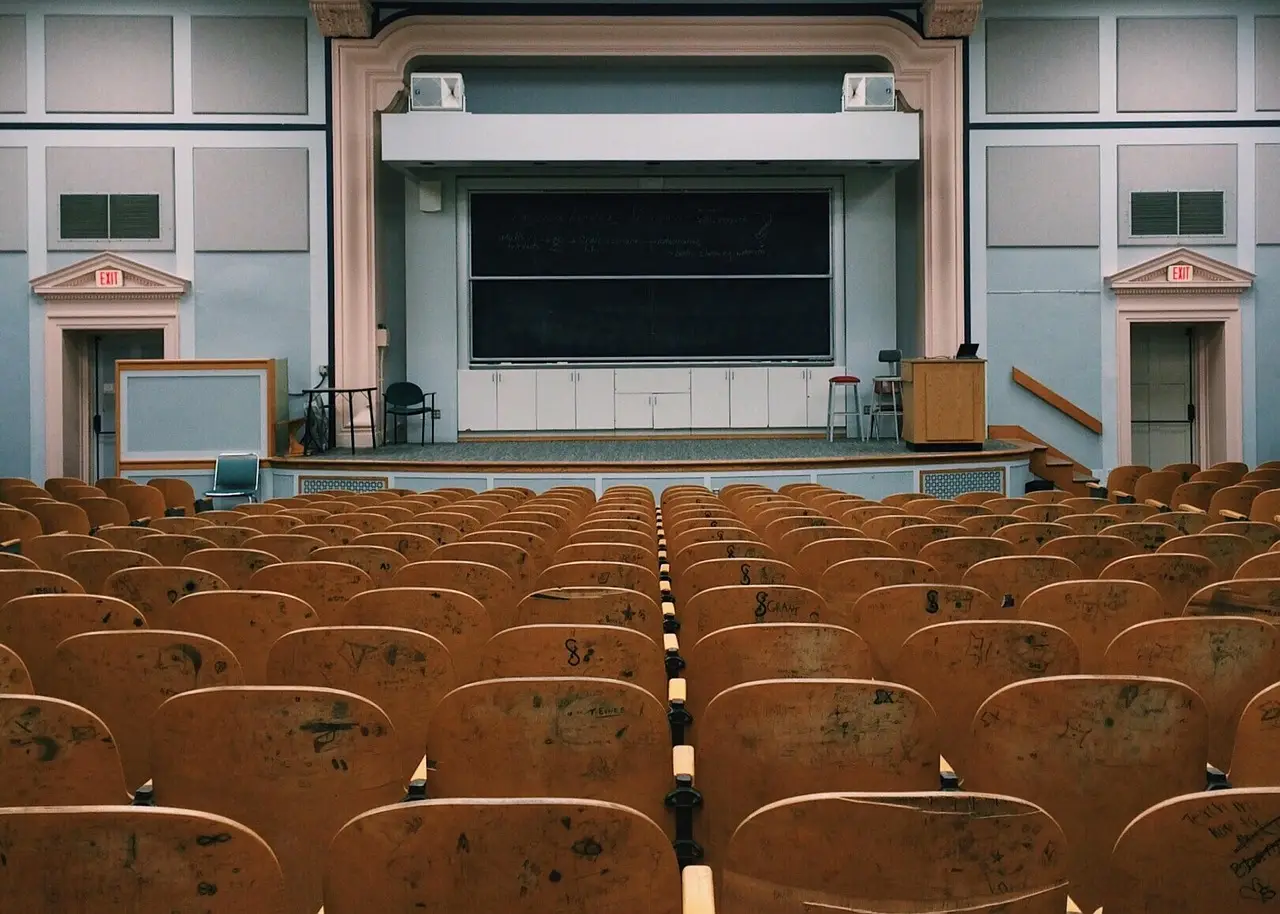
The co-author of Why Machines Will Never Rule the World argues that human-level intelligence cannot be modeled in a computer, and that higher education faces not an AI apocalypse but a forced audit of its own declining standards.
Jobst Landgrebe and Barry Smith's book argues a mathematical impossibility: genuine intelligence cannot be captured by computational models. As the author restates the thesis in a more recent article: "models required to perform cognitive behaviour in open-ended, thermodynamically complex and non-ergodic environments are not and will not become achievable." Human intelligence operates precisely in such environments, the author writes. (Non-ergodic means the system's behavior cannot be predicted from long-run averages, because conditions keep changing.)
The takeaway: no machine takeover is coming, and panic-driven policy is misplaced.
What does the author say about AI doomers?
The author is skeptical of government policies designed to protect the world from AI, calling the threat non-existent. The essay also rejects David Randall's proposal in Minding the Campus, which treats the author's anti-doom position and AI catastrophism as equally probable claims. The author writes that Randall "should take comfort—no doom is coming!" and that even Randall's agnosticism amounts to an overreaction.
The takeaway: the essay treats both doom predictions and fence-sitting about them as overreactions.
Is AI a real threat to teaching quality?
The author identifies a subtler danger. Professors, students and administrators may use AI to produce mediocre work even when the output is inferior to genuine human thought. The author offers a comparison: humanity has a revealed preference for Big Macs over high-quality home-cooked meals, and the same preference may govern educational work. The question is whether the "ingrained laziness" that prefers pushing a button to launch what the author calls an "AI slop cannon" can be resisted.
Some professors regard AI as a magnificent research assistant, believing they still produce the original insights while the machine handles drudge work. The author is unconvinced. Neither scenario requires AI to be sentient or equal to human thought, so both remain possible. But both depend on AI becoming reliable as a tool, and here the mathematical limits apply. The author's verdict on reliability for research use: highly uncertain. For professors who want to phone in lectures and students who skip studying: sufficient, but only for low standards of college education.
The takeaway: AI is reliable enough to degrade education, not reliable enough to improve research.
Why does the author say AI exposes existing failures?
The author concedes those low standards may already exist. Much of higher education, the author writes, long ago became a bargain of "we pretend to teach, and they pretend to study." If AI can simulate higher education sufficiently well, that is a sorry judgment on higher education itself, not on the machine.
The AI challenge could force positive change, pushing colleges and universities toward places where professors and students must study, write and think on their own. The author frames the required reform as modest: restore the ordinary human effort already expected in some venues since roughly Wilhelm von Humboldt, the founder of the modern research university. Teachers and students on this path will hold a massive advantage, but institutions must restore selectivity on both sides of the lectern—admitting fewer students and hiring fewer faculty.
The takeaway: the fix is not new technology but restored standards of effort.
Which scholars gain from AI, and which lose?
Students' reasoning abilities atrophy when they use AI, the author warns, and trained scholars are not immune to the same mental decay. Mathematicians are the exception. Their working environment has nothing to do with thermodynamics, the author notes, so new possibilities have opened: AI now functions not as a tool but as a competitor, prompting mathematicians to work differently and to acquire skills needed to evaluate the machine's achievements. Scholars in some other STEM fields face similar benevolent incentives. The author predicts excellent scholars in non-STEM fields will keep doing all their own work, and calls the present a time of experiment whose outcome remains unknown.
The takeaway: AI helps where it can be treated as an adversary, harms where it is treated as a shortcut.
What is the essay's final message?
The author closes with a direct instruction for higher education and society: "Don't Panic!" AI is, at best, "a grainy (statistical) photograph of the human mind" that cannot simulate it and is not even a perfect tool. The sector must adjust, but the adjustment is definitional rather than technological: eliminate higher education fit only for machines by restoring what should always have been the minimum expectation. The piece ends with a request for donations to support work reforming American higher education.
The takeaway: the essay's prescription is restoring minimum standards, not fighting the technology.
a.co (Original)
More from James Calloway
Show full bio
Correspondent covering regulation, policy and their impact on Faculty News is the daily press of the at Faculty News.
43 articles