DePaul Publishes AI Principles as Chicago Campuses Restructure Around the Technology
DePaul's new AI guiding principles took a 26-member committee over a year to draft. Meanwhile, UChicago, Northwestern and City Colleges roll out degrees and policies of their own.
Key takeaways
- DePaul published AI Guiding Principles last month after a 26-member committee worked over a year
- University of Chicago launches an applied AI master's degree in fall 2027
- City Colleges introduced its first AI associate degree at Wilbur Wright College this fall, serving a 73,000-student system
- Northwestern launched an undergraduate AI major and a generative-AI resources page this fall
- DePaul's RAISE Lab, created by Jay Cunningham, opened in 2025
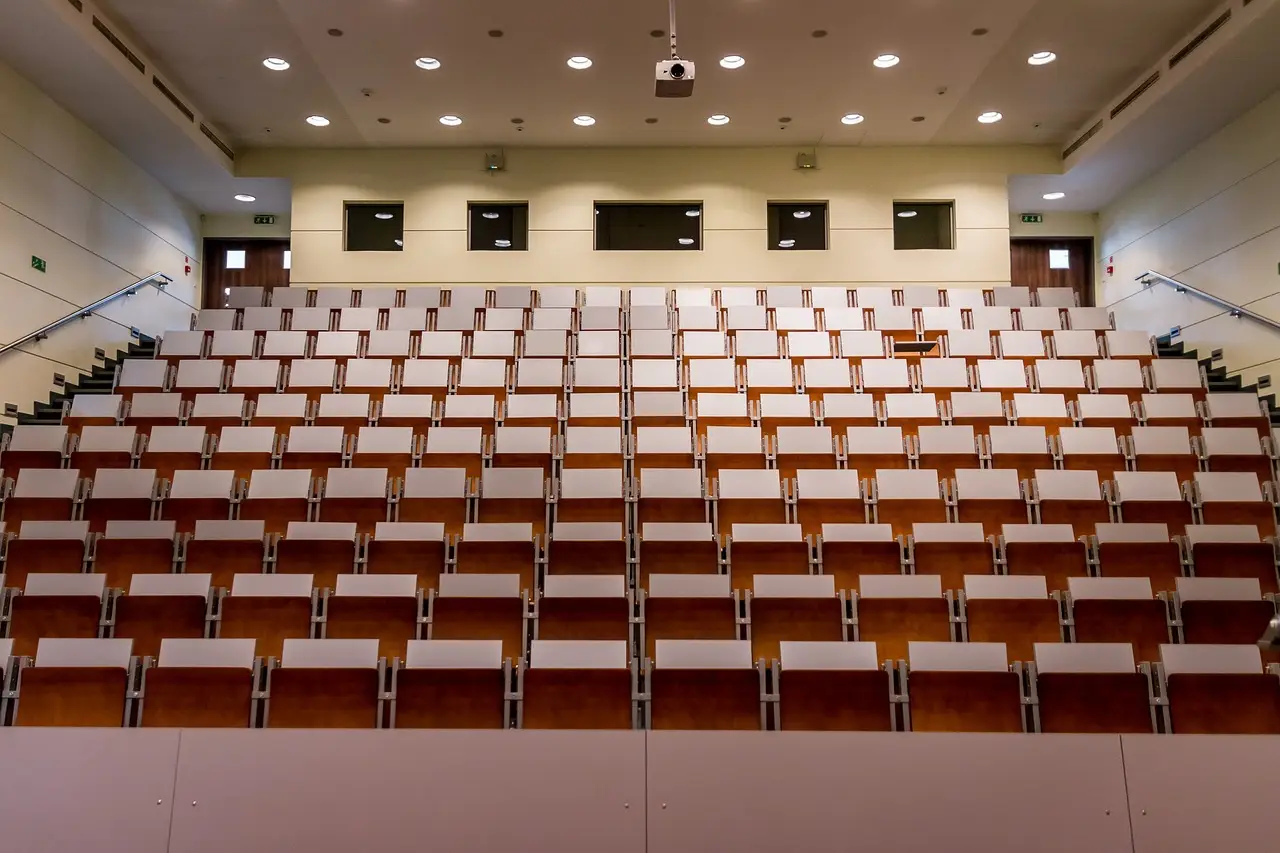
DePaul University published a set of "Guiding Principles on Artificial Intelligence" last month, the product of a 26-member Provost's Advisory Committee that worked for more than a year and still meets monthly to review policy, practices and classroom use. The document calls for academic integrity, intellectual honesty, transparency and human-centered use of the technology — and it arrives as institutions across Chicago reorganize curricula, committees and degree offerings around AI.
What do the principles actually cover?
The guidelines go beyond academic integrity, according to Jay Cunningham, an assistant professor of computing who created DePaul's Responsible AI Systems and Experiences, or RAISE, Lab and launched it in 2025. Roughly a dozen students work regularly in the Loop-campus lab, examining how AI shapes daily life.
Cunningham frames the technology in plain instrumental terms: AI attempts to model human behavior, human interactions and human decision-making, and students must learn to handle it accordingly. "Our job as humans is to wield the tools in ways that serve us best," Cunningham said. Over the past five years, he has watched employers increasingly demand AI fluency, which puts the burden of instruction on universities.
DePaul issued its first AI statement in 2023 — which, in the current pace of change, might as well date from a century ago, in the words of John Shanahan, professor of English and chair of the advisory committee. Shanahan convened faculty skeptics and enthusiasts alike, spanning disciplines from acting to computer science, into a single deliberative body.
"Launching this committee was a chance to both get a sense of what's going on out in the units, provoke discussion so that faculty are talking about what they're hearing from students, and also as a way to vet good ideas about what we should be doing moving forward," Shanahan said.
How are other Chicago institutions responding?
The approaches diverge sharply by institution, and the contrast illustrates how uneven the policy terrain remains:
- University of Chicago will launch a new master's degree in applied AI in fall 2027, while its law school prohibits electronic note-taking in some classes.
- Northwestern University introduced an undergraduate AI major this fall and an AI webpage of tools and resources designed, per the site, to "enable students, faculty and staff to use generative AI effectively and responsibly."
- City Colleges of Chicago, which serves more than 73,000 students a year across its network of public community colleges, introduced its first AI degree program this fall at Wilbur Wright College: an Associate of Applied Science in Artificial Intelligence and Machine Learning Development.
Mark Potter, provost and chief academic officer of City Colleges, told the Tribune the degree applies across disciplines from history and law to transportation and distribution. Before launching the program, the system stood up a district-wide AI steering committee that fixed its institutional position: preparing students for an AI-enabled workforce and society is essential.
"We cannot shy away from this technology. We can't bury our heads in the sand or anything like that," Potter said. "We need to ensure that our students have AI competencies, and part of that is responsible use of AI and ethical use of AI."
Ayoka Noelle Mota Samuels, associate vice chancellor of technology sector strategy, positioned the community college system as an affordable, trusted entry point for AI skills — one where learning is "not just transactional." Access, she argued, is the stake: "If you don't have the education community that is a part of being in leadership around AI, then you do run the danger of different folks being left out."
What does this change for faculty?
At DePaul, Shanahan detects a shift over the past two years: a growing recognition that AI need not be feared, though he concedes, "We're at the beginning of this." The practical question for instructors is one of negotiation, not prohibition. "AI is not going to go away, so I think it's this recognition of then how do we negotiate our place with it?" Shanahan said. "There will be times when it's useful to use, and there will be times when it's better to think your own thoughts and write your own sentences. It's both."
Google News · Higher Education (Source)
More from Daniel Okafor
Show full bio
Senior reporter covering technology and product news in Faculty News is the daily press of the at Faculty News.
38 articles