Middlebury Promises Free Tuition Under $175,000 — Without Cutting a Dime
Middlebury joins Princeton, Harvard and MIT in tuition-free guarantees up to $175,000 — but experts say the real fix is transparency, since at 445 colleges not one student pays sticker price.
Key takeaways
- Middlebury offers free tuition to families earning up to $175,000, aiding an estimated 35-50 additional students per class of ~630.
- At 445 colleges and universities, no student pays the advertised sticker price.
- Princeton, University of Chicago ($250,000), MIT, Harvard and Swarthmore ($200,000) have made similar guarantees.
- Nearly 80% of families eliminate schools based on price, a Sallie Mae survey found.
- Middlebury's total cost of attendance is $97,386, with room, board and other expenses at $24,462.
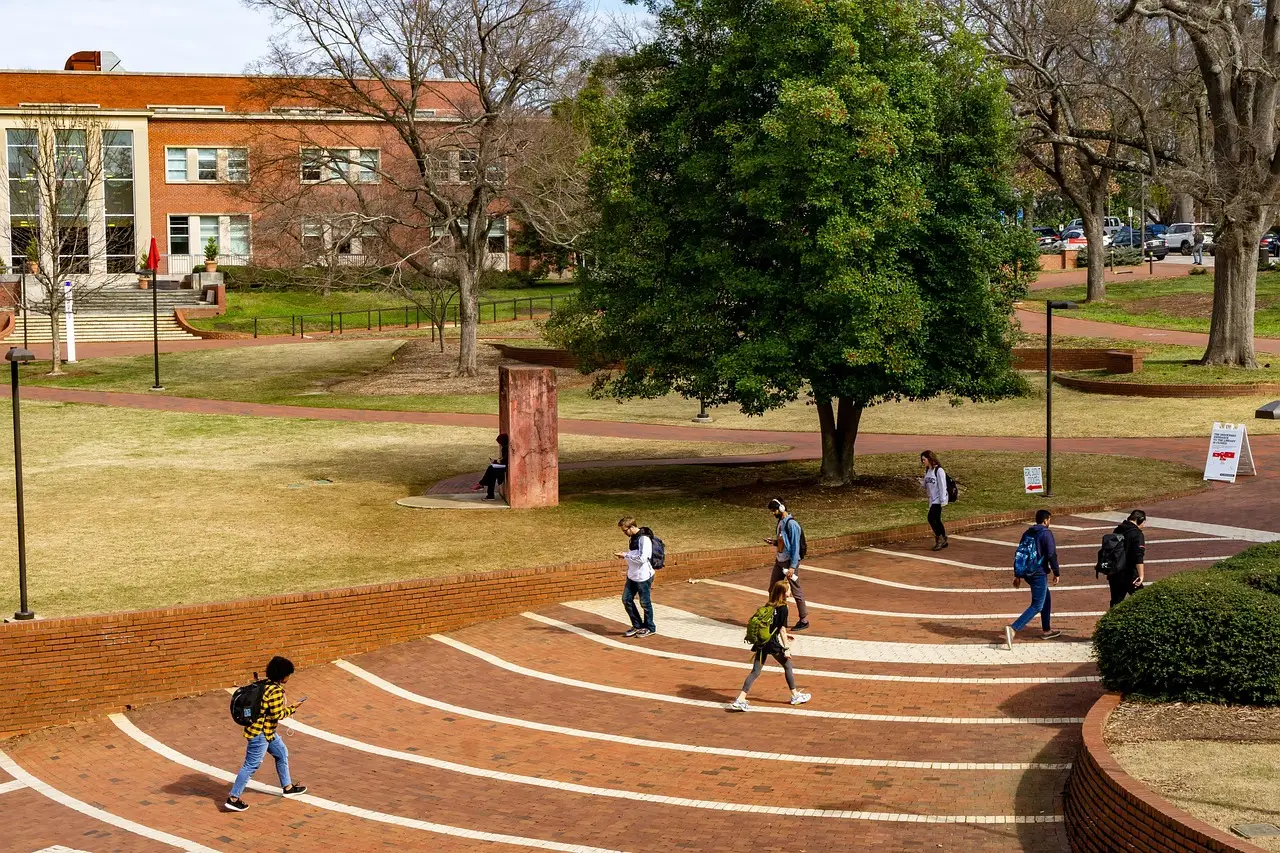
Middlebury College will charge no tuition to students from families earning up to $175,000 — a threshold more than double the U.S. median household income — starting next year. The announcement places the Vermont liberal arts college among a fast-growing set of institutions, from Princeton to MIT, racing to fix a problem that has quietly damaged higher education more than price itself: nobody can figure out what college actually costs.
What does the guarantee actually change?
Very little in dollar terms, and the college admits it. Middlebury expects between 35 and 50 additional families in the incoming class to benefit, out of roughly 630 new students each year. Most applicants from households at or below $175,000 already paid no tuition after financial aid.
"Let's make it as non-complicated as possible," said Ian Baucom, Middlebury's president. "If your family income is $175,000 or less, at Middlebury, you don't pay tuition." The goal, he said, is to "just [be] really clear and get that out of the way, and then let the students decide."
The guarantee does not cover room, board, books or transportation — $24,462 a year at Middlebury, where total listed cost of attendance is $97,386. Other aid remains available for those expenses.
Why are so many schools doing this now?
The timing is not coincidental. Many institutions have reached or passed a listed price of $100,000 per year, while public confidence in higher education sits near a record low. Most of the new income-based plans take effect next year or began this fall.
Middlebury joins a distinct tier of guarantees:
- Princeton — tuition-free for most families earning up to $250,000 with typical assets
- University of Chicago — $250,000
- MIT and Harvard — $200,000 each
- Swarthmore — $200,000
- Davidson — $175,000
Phillip Levine, a Wellesley College economist and author of Hidden Tuition, argues the public misreads these announcements entirely. Families assume "the college is cutting the price," he said, when in fact at most of these institutions "the college was already free for almost all those kids."
How bad is the pricing confusion?
The survey evidence is blunt:
- Nearly 80% of families eliminated a school from consideration based on price, according to Sallie Mae.
- Nearly 70% of students and parents find the financial aid process partly or completely confusing, the Strada Education Foundation found.
- Nearly two-thirds of Americans call four-year institutions unaffordable, Gallup reports — and cost is the top reason parents give for steering children away from them.
- More than three-quarters of adults without degrees cannot estimate the price of a public four-year institution within $5,000, per Gallup and the Lumina Foundation.
The culprit is structural. Colleges advertise a high sticker price almost no one pays, then discount it through what they call "scholarships." At 445 colleges and universities, not a single student pays the advertised price, a Hechinger Report analysis of federal data found. At private nonprofit four-year institutions, fewer than one in five families pay it. Yet consumers fixate on the sticker.
"The most important problem, I would argue, in college pricing today is the lack of transparency," said Levine, who holds a Ph.D. in economics and still struggled to calculate costs when enrolling his own sons. "If you're going to charge people different amounts of money, you have to provide them with some indication of what that's going to be."
Families often learn the real price only after admission and FAFSA submission. Liz Mark, a Wisconsin parent visiting Middlebury with her high-school junior, compared the system to medical billing. "You don't know exactly how much a procedure is going to cost until you get all of that information and get your pre-approvals," she said.
What are less wealthy institutions doing?
A few are genuinely cutting prices: Prescott College in Arizona, the University of Tulsa and Concordia University, St. Paul. The University of Pennsylvania, already tuition-free below $200,000 in family income, debuted a pre-application cost calculator. "Penn is more affordable than most people realize," the page declares.
Resource-constrained schools are targeting narrower pools: Earlham College offers free tuition to Indiana families earning up to $100,000; New Hampshire does the same at its public universities; Wake Forest covers in-state students under $200,000; Marist caps tuition, room and board at $32,000 annually for New York families earning $200,000 or less.
Nicole Curvin, Middlebury's dean of admissions, cited cost-of-living anxiety and a volatile labor market. "Affordability is the top question that every family is asking us, and we have to be willing to address that," she said. Baucom framed the stakes more broadly: "The social contract of American life depends upon the idea that everyone can come into the fullness of what it means to live and think and study and work here. And that's fracturing."
Google News · Higher Education (Source)
More from Daniel Okafor
Show full bio
Senior reporter covering technology and product news in Faculty News is the daily press of the at Faculty News.
38 articles