Treasury Tax-Exemption Proposal Could 'Devastate' Private Colleges, Grinnell's Harris Warns
Grinnell President Anne Harris warned a Treasury proposal on tax-exempt status could "devastate" private colleges financially, even as courts restored international students' internship access.
Key takeaways
- Anne Harris delivered the legislative update on Tuesday, Nov. 17, in a series running since spring 2025.
- A federal court vacated proposed Duration-of-Status changes and issued a preliminary injunction protecting Curricular Practical Training internships.
- A proposed Treasury rule could end federal tax exemption for private schools found to discriminate by race, color or national/ethnic origin.
- Iowa's legislative session begins Jan. 11; Republicans hold both chambers with narrowed margins, and Rob Sand takes office as governor.
- The College is monitoring the Iowa Tuition Grant, community-college bachelor's degrees and a renewed endowment-tax push.
A proposed U.S. Department of Treasury rule that could strip private colleges of their federal tax-exempt status tops the list of threats facing higher education, Grinnell College President Anne Harris told faculty and staff on Tuesday, Nov. 17. "It would devastate the sector financially," she said.
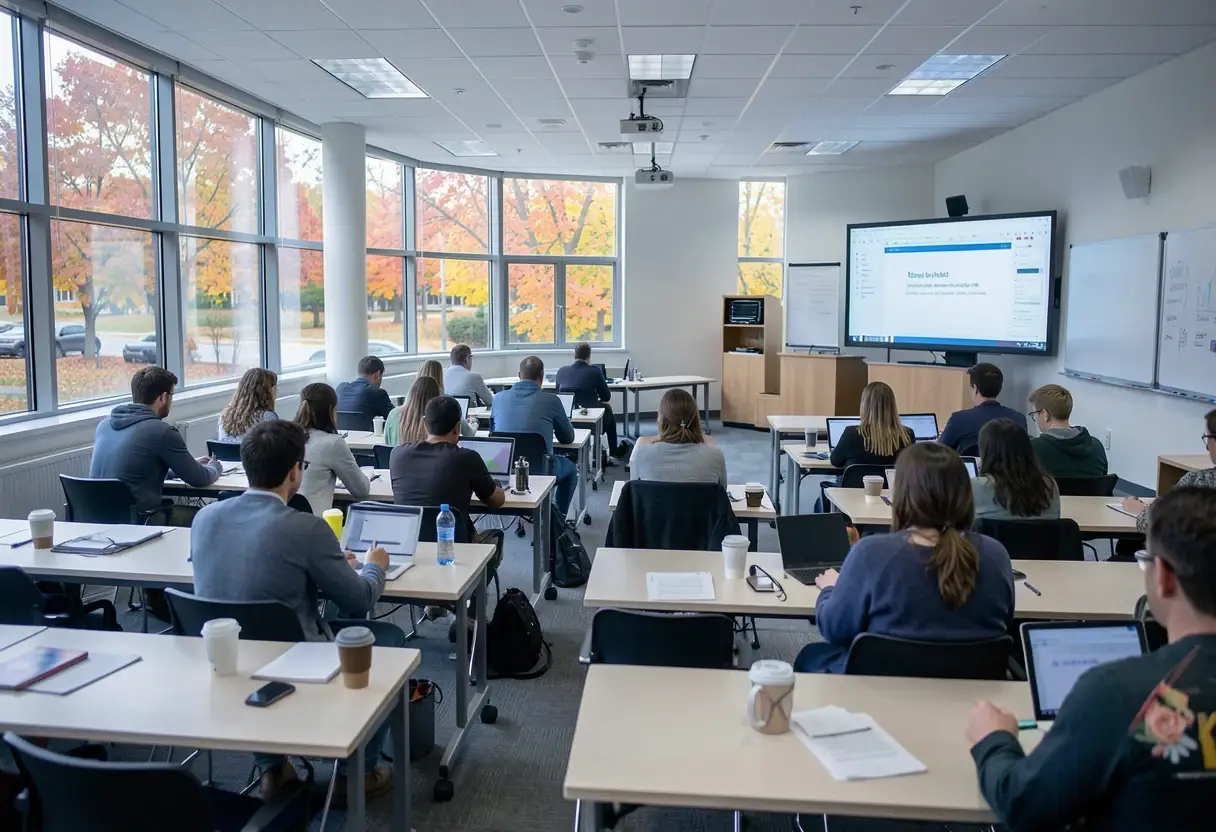
Harris delivered the hour-long legislative update in the Humanities and Social Studies Center auditorium, part of a series the College launched in spring 2025 to track policy developments affecting higher education.
She opened on two favorable court rulings for international students: a federal decision vacating a proposed change to Duration-of-Status regulations and a preliminary injunction blocking restrictions on Curricular Practical Training (the rule allowing eligible international students to hold internships).
"We can start with international students' internships once again. That's a huge deal," Harris said.
Even so, she cautioned that the College must stay alert to federal shifts on immigration, accreditation and civil-rights enforcement. "We constantly prepare for scrutiny, we also prepare for action," she said.
Why the Treasury rule worries her most
Under the proposal, private schools found to discriminate based on race, color or national or ethnic origin could lose eligibility for federal tax exemption. Harris flagged the federal government's possible interpretation of "discrimination" as the core problem, pointing to official statements that characterize celebrations such as Black History Month as discriminatory.
She also questioned comparisons to the Supreme Court precedent involving Bob Jones University, which lost its tax-exempt status over policies prohibiting interracial relationships. Removing tax exemption from nonprofit colleges, she argued, could fundamentally alter their financial structures.
Asked during the Q&A whether the proposal concerned her as much as earlier federal threats, Harris reached for a metaphor: ordinary regulatory challenges are like navigating a river, while losing tax exemption is going over a waterfall.
"It does keep me up at night because it's so devastating if it comes to pass," she said. Still, she expressed confidence that legal challenges would give institutions room to contest the rule before consequences materialize.
What's next for accreditation?
Harris also addressed potential changes to accreditation standards, including heavier emphasis on graduates' earnings and on what federal officials call "viewpoint diversity." She questioned how political viewpoints could be evaluated inside a college, arguing that differing opinions don't reduce neatly to political categories.
What do Iowa's election results mean?
Turning to state politics, Harris reviewed the recent election results and their implications for the College's relationships with lawmakers. She discussed the incoming administration of Governor-elect Rob Sand, noting his emphasis on divided government and the potential for bipartisan cooperation. Republicans retained control of both chambers of the Iowa Legislature, though their margins narrowed.
Ahead of the legislative session beginning Jan. 11, Harris flagged several items the College will monitor:
- potential changes to the Iowa Tuition Grant
- proposals allowing community colleges to offer four-year degrees
- renewed attempts to introduce an endowment tax
A bill's introduction doesn't guarantee passage, she noted, pointing to earlier higher-education proposals that died in the legislative process. But proposed legislation can affect campus communities even when it fails. "One person can put forward one bill that makes people feel unwelcome or unwell," Harris said.
Can students recover lost internships?
One attendee asked whether international students who lost internships to federal restrictions can get them back. Harris said some spring-semester opportunities might remain open, depending on whether employers have already filled the positions, while summer internships look more promising. Career development staff will keep supporting affected students, she said.
Harris closed by reiterating the value of maintaining relationships with lawmakers regardless of party and keeping Grinnell's contributions visible in legislative discussions. "My goal is always to have Grinnell be valued and understood," she said.
For faculty senates elsewhere, the message was plain: watch the Treasury rule closely, and don't assume the courts will settle everything.
Google News · Higher Education (Source)
More from Tom Whitfield
Show full bio
News editor covering technology and product news in Faculty News is the daily press of the at Faculty News.
38 articles